

Transitioning a parent to assisted living is a significant emotional and logistical milestone for any family. Selling the family home is often the primary financial mechanism that makes this move possible, yet it requires careful coordination to avoid costly delays or family conflict. Mark Patton & Associates specializes in guiding families through these complex transitions in Ventura County, ensuring the process is handled with discretion, compassion, and strategic clarity. This guide outlines the essential steps to protect your parent's equity and reduce stress during this major life change.
1. Initiate the Conversation Early
Start the dialogue about the move and the sale well before the transition date. Families often wait until the last minute to discuss selling, which creates pressure and limits options. An early conversation allows everyone to align on the timeline, the destination, and the financial expectations. This proactive approach helps prevent last-minute panic and ensures the family is emotionally prepared for the change.
2. Secure Legal Authority and Documentation
Verify that you have the legal right to sign documents and sell the property. If your parent is still capable, they should sign a Power of Attorney (POA) that specifically grants you the authority to handle real estate transactions. If a POA is not in place, the property may need to go through probate, which can add months to the timeline. Confirming legal standing is the first practical step in the selling process.
3. Obtain an Accurate Market Valuation
Get a professional valuation to understand the true market value of the home. Online estimates are often inaccurate for older or unique properties. A local expert can analyze recent comparable sales in your specific Ventura County neighborhood to provide a realistic price range. This valuation helps you determine if the sale proceeds will cover the assisted living costs and any remaining debts.
4. Declutter and Prepare the Property
Systematically clear out personal items and prepare the home for showings. A home filled with decades of belongings is difficult for buyers to visualize as their own. Work with your parent to sort through items, deciding what to keep, donate, or sell. Professional cleaning and minor repairs can also significantly improve the home's appeal and final sale price.
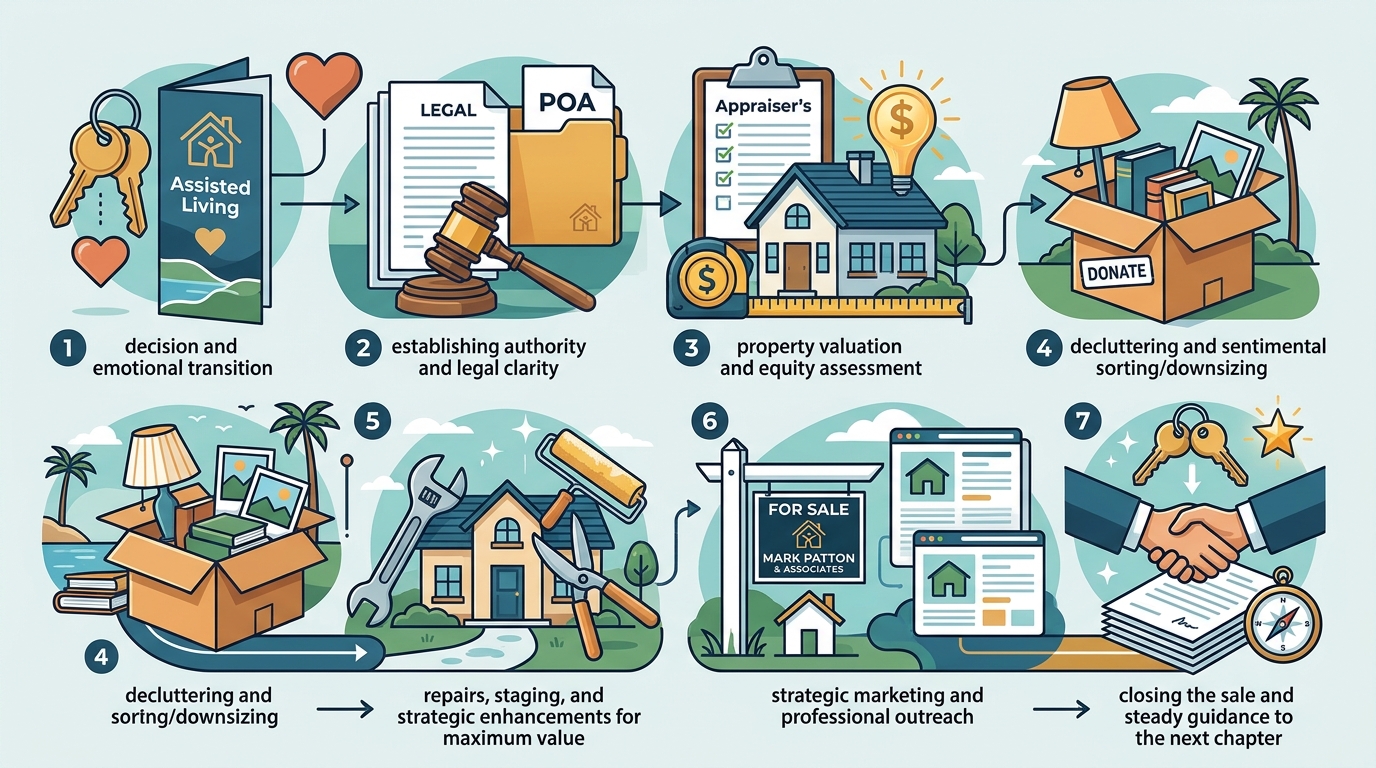
5. Choose the Right Listing Strategy
Select a marketing approach that balances speed with maximum value. Depending on your timeline, you may choose a traditional listing, a cash sale, or a bridge loan. Each option has different implications for how quickly you can close and how much you will net. A strategic agent can help you weigh these options based on your specific financial needs and the condition of the property.
6. Coordinate the Sale with the Move
Align the closing date with the assisted living move-in date. Misaligned timelines can result in paying for two residences simultaneously or leaving the home vacant and uninsured. Careful scheduling ensures that the keys are handed over at the right time, minimizing financial gaps and logistical headaches for the family.
7. Manage the Financial Distribution
Plan how the sale proceeds will be distributed and used. The funds from the sale will likely cover the assisted living facility's entrance fees and monthly costs. It is important to have a clear plan for any remaining equity, whether it is distributed to heirs or used for other family needs. Consulting with an accountant or estate attorney can help ensure the funds are managed correctly and tax-efficiently.
Choosing the Right Approach
Frequently Asked Questions
How long does it take to sell a home for an assisted living move?
The timeline varies based on market conditions and the home's condition. In a typical market, it may take 30 to 60 days to close, but this can be longer if the home requires significant repairs or if probate is involved. Working with an experienced agent can help streamline the process and meet your move-in deadline.
Do I need a Power of Attorney to sell my parent's home?
Yes, if you are acting on your parent's behalf, you generally need a valid Power of Attorney that includes the authority to sell real estate. Without it, you may not be able to sign the closing documents. If a POA is not in place, the property may need to go through probate, which is a longer and more complex legal process.
Can I sell the home if my parent is still living in it?
Yes, you can sell a home while the owner is still living in it. The sale can be structured so that the owner remains in the home until the closing date. This is a common approach for assisted living transitions, allowing the parent to stay in their familiar environment until the very last moment.
What are the tax implications of selling a parent's home?
Selling a primary residence may qualify for a capital gains exclusion, but this depends on how long the owner lived in the home and the amount of profit. It is important to consult with a tax professional to understand the specific implications for your situation. Proper planning can help minimize the tax burden on the sale proceeds.
How can I avoid family conflict during the sale?
Open communication and clear roles are key to avoiding conflict. Ensure that all family members are informed about the process and the financial decisions being made. Having a neutral third party, such as a real estate agent or attorney, can help mediate discussions and keep the process focused on the parent's best interests.
What if the home needs major repairs before selling?
You have several options, including making the repairs, selling the home as-is, or using a cash buyer who specializes in distressed properties. Each option has different pros and cons regarding price and timeline. An experienced agent can help you evaluate the cost of repairs versus the potential loss in value from selling as-is.
Next Steps
Navigating the sale of a parent's home for assisted living is a significant undertaking, but it does not have to be overwhelming. By following these steps and working with a trusted professional, you can ensure a smooth and respectful transition. Mark Patton & Associates is here to support you every step of the way. To begin the process, for a confidential consultation.